THE DETAIL TO KEEP
Before-and-after imagery attributed to consumer research; complete methods not independently appraised.
Sections in this fieldnote
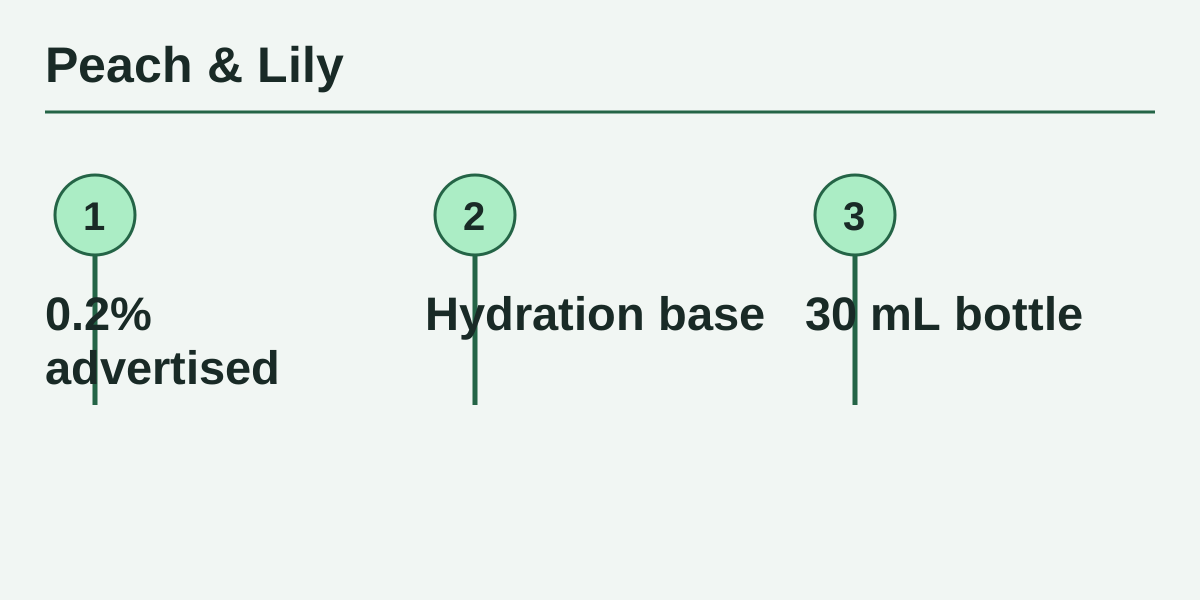
Peach & Lily Copper Peptide Pro Firming Serum puts a relatively small number at the center of its description: 0.2% copper peptide. For a shopper used to comparing headline percentages, that can invite a quick ranking. A more useful first step is to read the amount with the formula, the selected bottle, and the kind of evidence the brand presents.
This file uses the official product listing and its public product-data record captured October 5, 2026. The selected 30 mL version was listed at $49. The ordinary page capture exposed limited detail, so the supporting product record matters: it identifies exactly which variant and description were available to this review, without implying a purchase or a personal wear test.
A small percentage is not a short review
The advertised 0.2% is a product claim worth recording accurately. It does not by itself tell us whether this serum is more or less useful than a product advertising 1%, 2%, or a multi-peptide complex. Those figures can have different definitions, and finished formulas introduce further differences that a percentage-only table would hide.
Before treating a number as a dose comparison, ask whether it refers to the same ingredient in the same kind of measurement. Our percentage guide is a useful companion. The Ordinary's copper serum gives another example of a product whose name includes a number but still requires a reading of its complete label.
Read the hydration story beside the peptide story
The official description names hyaluronic acid, amino acids, and squalane alongside the copper peptide. These details explain why a review should consider more than the headline ingredient. A reader interested in the feel of a serum, or in its place beneath a moisturizer, needs information about the complete formulation rather than an isolated ingredient narrative.
We did not separate the contributions of those components or test the texture. Nor does the presence of a familiar moisturizing ingredient establish that the formula will agree with every person. Keep any known ingredient sensitivities and the current package declaration in view. The base fieldnote helps translate a serum-versus-cream preference into a more concrete formula question.
What the accessible record does and does not establish
The public product-data record identifies the 30 mL variant and contains the serum's marketing description. That is useful evidence of what Peach & Lily advertises. It is not a laboratory certificate, a complete assessment of every ingredient, or a guarantee that a future package will match an archived record without change.
If a detail is missing from the accessible listing, ask the manufacturer for it. Do not substitute the ingredient list of another Peach & Lily product merely because the packaging looks related. Our label-change guide explains how to keep an online record, a received package, and a later formula revision from becoming one inaccurate composite.

Photographs need their study context
The product description attributes before-and-after imagery to a consumer study. That tells us something about the source of the promotional material. It does not provide, by itself, all the information needed to assess lighting, comparison conditions, participant selection, duration, or the size and consistency of the reported effect.
A photograph can be a reason to look for the methods rather than a reason to skip them. Ask what was measured and whether the current finished serum was the tested preparation. The evidence fieldnote provides the broader framework; it does not supply missing methods for this particular product. We have not independently appraised a full trial establishing superiority over the other products in this library.
Work out the purchase unit
The observed $49 is attached to the selected 30 mL bottle. It is not a monthly care fee or a promise that the bottle lasts a particular number of weeks. A usage estimate would require the actual application amount and frequency, which can vary. Shipping, discounts, and regional availability should be checked with the selected order rather than inferred from a campaign banner.
For someone comparing several serums, bottle volume can help describe the offer, but it cannot determine value alone. A larger container of an unwanted texture is not automatically the better purchase. This record leaves room for preference while keeping it separate from any claim about clinical performance.
Build a short, usable decision record
Keep three items together: the exact product name, the 0.2% description, and the ingredient information supplied for your selected bottle. Add the actual total you would pay and a note about any unresolved question. This is more useful than saving only a screenshot of the largest claim on the page.
Readers exploring a provider-guided cream can open the CoreAge Bounce Back review; readers comparing retail textures can browse the product files. The label lens lets you collect questions for either route. The goal is a clear account of the offer, with enough context to avoid mistaking a tidy percentage for a complete answer.
SOURCE NOTES
What this record draws on
- Peach & Lily — Copper Peptide Pro Firming Serum ↗
Manufacturer advertises 0.2% copper peptide; no independent concentration assay. Official product data: selected 30 mL $49; checkout and delivery untested. Before-and-after imagery attributed to consumer research; complete methods not independently appraised. Accessed 2026-10-05.
- FDA — Cosmetics Labeling Guide ↗
General ingredient-order rules, including the 1% or less exception and separate color-additive provisions. Not a determination about any particular product. Accessed 2026-09-26.
- FDA — Cosmetic, drug, or both? ↗
Explains intended use, product claims and the distinction between cosmetics and drugs. No separate legal category for cosmeceuticals. Accessed 2026-09-25.
Individual source access dates are recorded above. Prices, stock, labels, and directions can change. How we review.