THE DETAIL TO KEEP
Ingredient rationale and developer credentials do not establish a personal outcome.
Sections in this fieldnote
Remedy Copper Peptide Complex Advanced Firming Serum is a skincare product from Remedy's retail line. It should not be confused with a similarly named telehealth service. That identity check is the first practical step in a review: the product, seller, and source need to refer to the same thing before price or ingredient comparisons begin.
The official October 5, 2026 product record describes a 1 fl oz serum with a 1% GHK-Cu complex claim and a $30 one-time offer. This file examines those public statements and the formula context. We have not used the serum, tested a subscription, or independently assessed the clinical performance of the finished product.
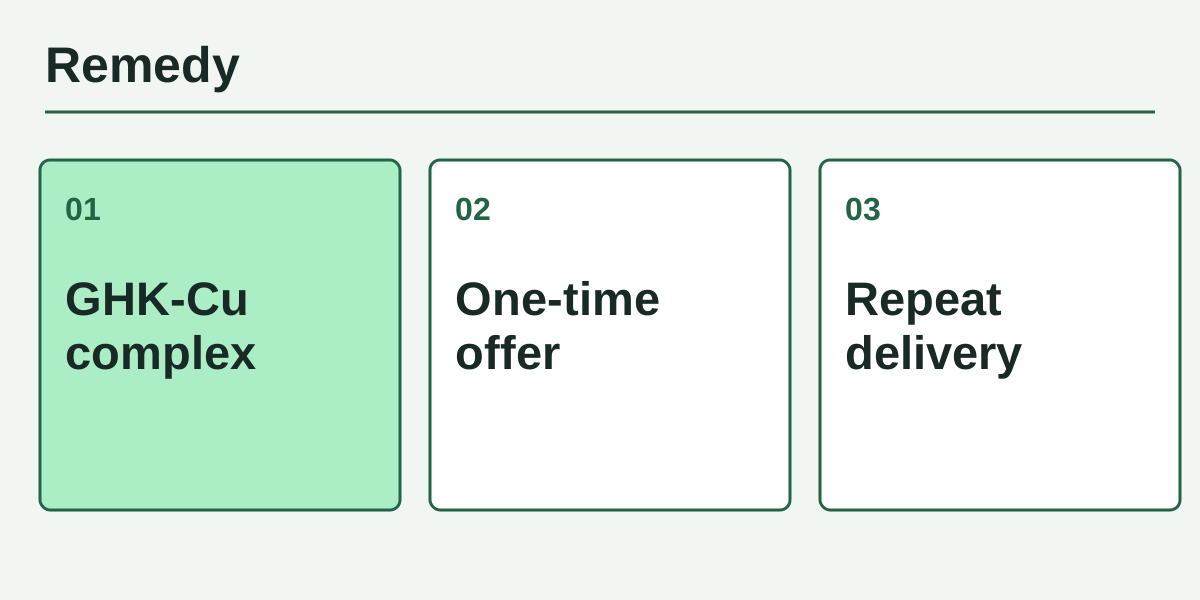
Preserve the word complex
The headline's wording includes GHK-Cu and complex. Both belong in a careful note. Removing the latter word can make a description of a formulated ingredient system appear to be a measurement of pure peptide in the finished bottle. This review has not independently established a laboratory assay or the precise basis of the advertised percentage.
The distinction is useful beside The Ordinary's 1% serum description and CoreAge's 2% cream offer. Similar-looking numbers do not make these a simple strength ladder. The relevant questions are what is being measured, how the preparation differs, and what evidence exists for each finished formula.
Look at what accompanies the copper
The manufacturer's description places copper peptides alongside hydrators, ectoin, and other formulation components. This broadens the review beyond a single-ingredient story. A product can be designed to provide several kinds of cosmetic benefits, but the presence of multiple ingredients does not tell us how much each contributes to a reported change.
We did not perform a texture or compatibility test. If a reader's main concern is how a serum will sit beneath a moisturizer, the brand's general language is a starting point rather than a verified result for that person's routine. Use the complete current declaration and the base fieldnote to make that question more specific.
A dermatologist-created claim is not a review of your skin
Remedy emphasizes its development background and presents testing-related descriptions. Those can be relevant to understanding how the brand positions the formula. They do not mean that this publication has a dermatologist's assessment of an individual reader, or that every person with sensitive skin will have the same experience.
The product's fragrance-related and sensitivity-related statements also have distinct meanings. An ingredient exclusion is not identical to a completed tolerance test, and a test summary is not a guarantee against a reaction. Our fragrance and hypoallergenic guide gives those reassuring phrases a more precise context.

The refill choice changes the purchase
The captured offer includes a one-time price and an option to subscribe for savings, with selectable delivery intervals. A lower recurring amount is not the same transaction as buying a single bottle. Before choosing it, check the next charge, shipment frequency, cancellation method, and any deadline that applies before an order is processed.
We did not enter checkout or test account controls. A page's promise of savings should therefore remain attached to its stated conditions. If you are uncertain whether the product will fit your routine, that uncertainty is a practical part of the purchase decision; it should not disappear merely because the subscription price looks more attractive in a comparison card.
Keep study claims connected to the tested preparation
The manufacturer discusses copper-peptide research and the intended benefits of its serum. General ingredient research can explain the rationale for a formula, but it does not automatically establish the performance of this precise bottle. A useful evidence request asks whether the finished serum was tested, against what comparison, and with which outcomes.
We did not independently appraise a complete controlled trial demonstrating that this product outperforms the other options in this library. The skin-evidence fieldnote explains why a laboratory mechanism, a participant's opinion, and an objective human measurement are not interchangeable pieces of proof.
A routine product is not procedure aftercare
Terms such as repair can sound broader than the actual intended use. They should not be read as permission to use a cosmetic serum on an open wound or immediately after a procedure. Those situations require instructions from the professional managing the condition or treatment, not a general review of an online product page.
For ordinary label comparison, keep Remedy's exact name, complex wording, full ingredient declaration, and selected buying plan together. The label lens lets you save the questions that remain, and Compare places the offer beside other retail and provider routes. A good decision record is one that remains clear even after the promotional headline is removed.
SOURCE NOTES
What this record draws on
- Remedy — Copper Peptide Complex Serum ↗
Advertised 1% GHK-Cu complex; precise percentage basis not independently assayed. Displayed $30 one-time, with a separate subscription option and interval choices. Ingredient rationale and developer credentials do not establish a personal outcome. Accessed 2026-10-05.
- FDA — Cosmetics Labeling Guide ↗
General ingredient-order rules, including the 1% or less exception and separate color-additive provisions. Not a determination about any particular product. Accessed 2026-09-26.
- FDA — Cosmetic, drug, or both? ↗
Explains intended use, product claims and the distinction between cosmetics and drugs. No separate legal category for cosmeceuticals. Accessed 2026-09-25.
Individual source access dates are recorded above. Prices, stock, labels, and directions can change. How we review.